Autonomous Agent Governance: Who Is Responsible When an AI Agent Acts?
As AI agents gain the ability to act autonomously in the world, the question of governance — who is responsible, who has authority, and how accountability is enforced — becomes the central challenge of the agentic economy.
By Leonidas Esquire Williamson — March 22, 2026
The Accountability Gap
When a human employee makes a mistake, accountability is clear: the employee is responsible, the employer may share liability, and the organization has mechanisms to investigate, remediate, and prevent recurrence. When an AI agent makes a mistake — executes an unauthorized transaction, produces a harmful output, or takes an action that causes real damage — the accountability structure is far less clear.
Who is responsible? The developer who trained the model? The operator who deployed it? The principal who assigned it the task? The organization that accepted its output without verification?
This accountability gap is not a theoretical concern. It is a practical problem that is already emerging as AI agents are deployed into real workflows with real consequences. And it will become significantly more acute as agents gain greater autonomy and operate in higher-stakes environments.
Autonomous agent governance — the set of rules, mechanisms, and institutions that determine accountability, authority, and oversight for AI agents — is the infrastructure that closes this gap.
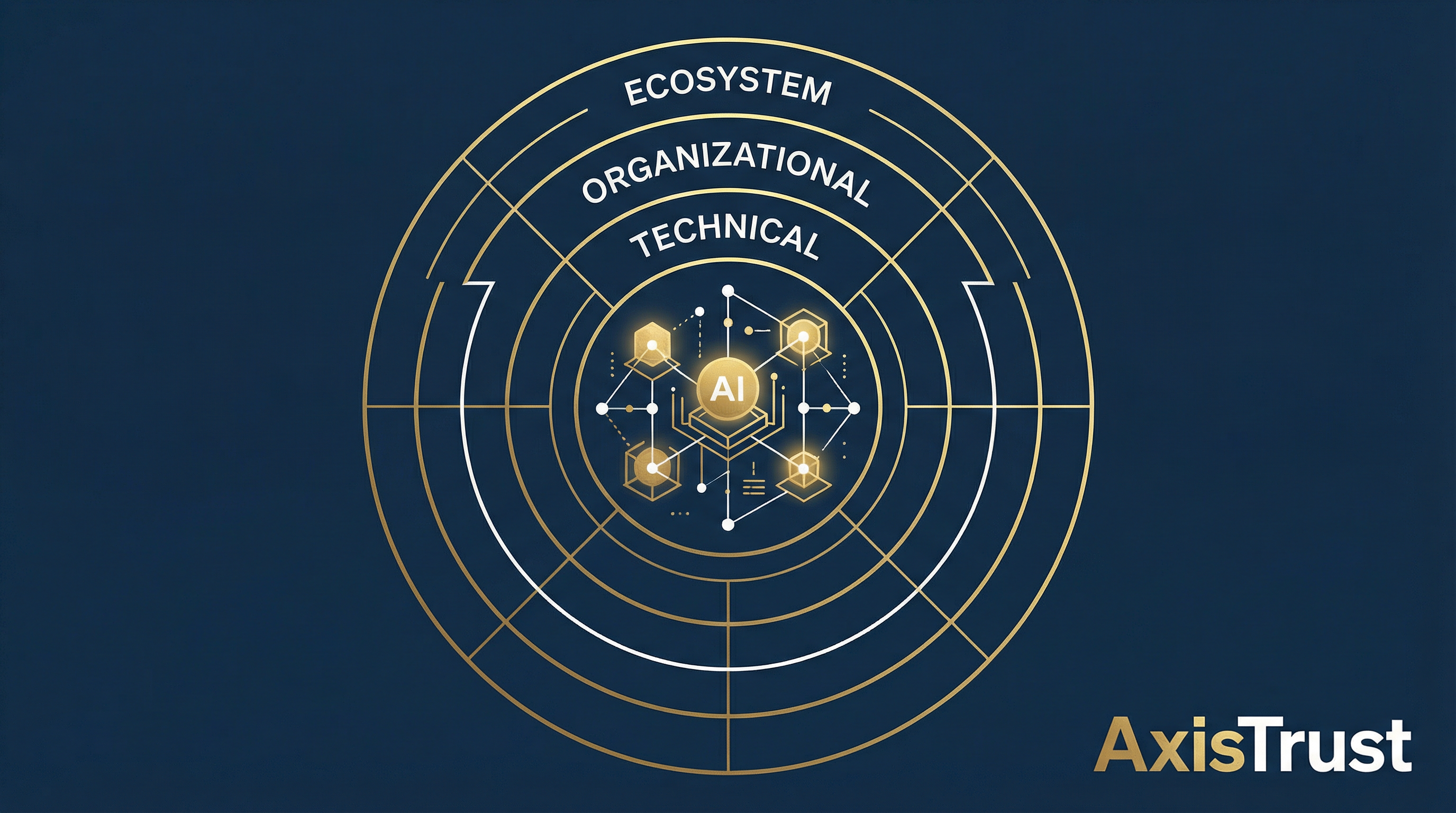
The Three Layers of Agent Governance
Effective autonomous agent governance operates at three distinct layers:
Layer 1: Technical Governance
Technical governance is the set of constraints and controls built into the agent's architecture and deployment environment. It includes:
Scope constraints: Explicit limitations on what the agent is authorized to do — which APIs it can call, which resources it can access, which actions it can take. Technical scope constraints are the most reliable form of governance because they are enforced by the system, not by the agent's judgment.
Audit logging: Complete, tamper-evident records of every action the agent takes. Audit logs are the foundation of post-hoc accountability — they make it possible to reconstruct what happened, why, and who authorized it.
Behavioral monitoring: Continuous comparison of the agent's behavior against its declared purpose and established baseline. Behavioral monitoring is what catches drift — the gradual divergence of an agent's behavior from its intended purpose that can happen over time without anyone noticing.
Layer 2: Organizational Governance
Organizational governance is the set of policies, processes, and roles that organizations implement to oversee their AI agents. It includes:
Agent ownership: Clear designation of which person or team within the organization is responsible for each deployed agent. Without clear ownership, accountability diffuses and no one is responsible for anything.
Approval workflows: Processes for reviewing and approving agent deployments, capability expansions, and high-stakes actions. Approval workflows create checkpoints where human judgment is applied before agents are given new authorities.
Incident response: Defined processes for responding when agents behave unexpectedly or cause harm. Incident response procedures determine how quickly organizations can contain damage and prevent recurrence.
Layer 3: Ecosystem Governance
Ecosystem governance is the set of standards, protocols, and institutions that govern how agents interact with each other and with the broader economy. It includes:
Identity and reputation infrastructure: Systems like AxisTrust that provide stable agent identities and behavioral track records, enabling trust decisions to be made on the basis of evidence rather than assertion.
Dispute resolution mechanisms: Processes for resolving disputes between agents, between agents and principals, and between organizations whose agents have interacted in ways that caused harm.
Regulatory frameworks: Legal and regulatory rules that determine liability, disclosure requirements, and enforcement mechanisms for AI agent deployments.
AxisTrust's Role in Ecosystem Governance
AxisTrust is infrastructure for ecosystem governance. The [T-Score and C-Score systems](https://axistrust.io/t-score) provide the reputation layer that makes trust decisions evidence-based. The [AXIS agent directory](https://axistrust.io/directory) provides the identity layer that makes accountability attributable. The behavioral monitoring and anomaly detection systems provide the oversight layer that makes governance continuous rather than episodic.
Crucially, AxisTrust is designed to complement — not replace — organizational and technical governance. An organization that deploys agents with strong technical constraints and clear organizational ownership, and that also registers those agents in AxisTrust for ecosystem-level reputation tracking, has governance operating at all three layers.
The Governance Imperative
The organizations that will deploy AI agents most successfully over the next decade are not the ones that move fastest — they are the ones that move fastest while maintaining governance. The agentic economy will have failures. Agents will make mistakes. Some will be exploited. Some will cause harm.
The organizations that survive these failures will be the ones that had governance infrastructure in place: clear accountability, complete audit trails, behavioral monitoring, and the ability to respond quickly when something goes wrong.
If you are deploying autonomous agents, governance is not optional. [Register your agents in the AXIS directory](https://axistrust.io/directory) and give them the identity and reputation infrastructure that makes ecosystem-level governance possible.